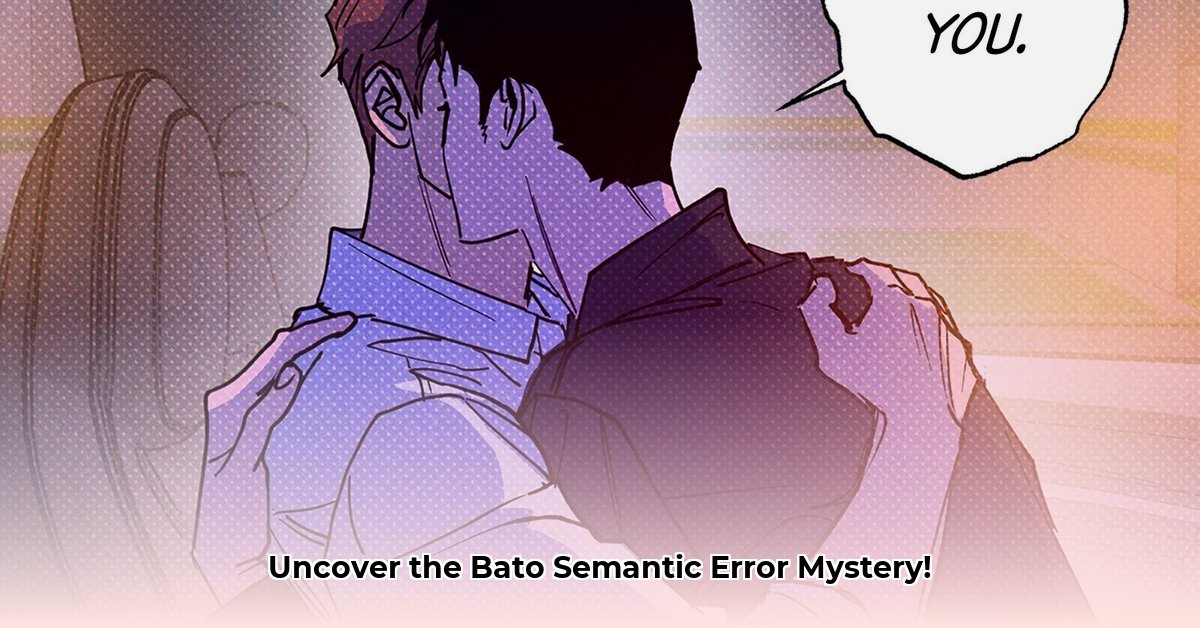
Eish, Semantic Error! That webtoon about the coding whiz Sangwoo and the free-spirited Jaeyoung has taken the internet by storm, hasn't it? You've probably stumbled across different versions online, especially those on bato.to and batocomic.net. But which one’s the better lekker? This review compares these two adaptations, looking at everything from the pacing and character development to the art style and overall vibe. Whether you're a Semantic Error veteran or a curious newcomer, join us as we unpack what makes each version unique and decide which truly captures the magic of the original.
Two Takes on a College Romance
Think of it like this: two different directors adapting the same movie script. Both aim for the same story, but their approaches – and the final product – will be different. bato.to and batocomic.net both adapt Semantic Error, but with distinct styles. One's a whirlwind romance, the other a slow burn. Which one best suits your taste?
Bato.to: A Speedy Romance
The bato.to adaptation is like watching a rom-com on fast forward. It's a visual whirlwind, a real page-turner! The romance ignites quickly, and the visuals are sharp, vibrant, and colourful – a feast for the eyes! It’s easy to get swept away. However, this rapid pace might mean some nuances are lost. We see the sparks, but do we fully understand Sangwoo and Jaeyoung's inner lives, their individual struggles? Perhaps some depth is sacrificed for excitement.
Batocomic.net: Character First
Batocomic.net, on the other hand, is like savouring a good novel. The pacing is deliberate, focusing on character development. Relationships evolve organically. We get to know Sangwoo and Jaeyoung intimately – their strengths, weaknesses, hopes, and anxieties. The art style is softer, creating a cozy and introspective mood. This slower burn might lead to a deeper connection with the characters and a richer emotional experience. It’s a more thoughtful approach to the story.
A Head-to-Head Showdown: Pace and Feeling
Both adaptations capture the core "enemies-to-lovers" magic, but their methods differ. Bato.to is all about instant gratification, while batocomic.net prefers a gradual, heartfelt approach. This pacing difference directly impacts the emotional experience. Bato.to delivers immediate thrills, while batocomic.net offers a more profound, lingering connection. Which is "better"? It depends on what you seek in a story.
Art Styles: A Visual Feast (or a Subtle Charm?)
Visual presentation also matters. Bato.to uses bright, bold colours and dynamic panels. It's vibrant and energetic. Batocomic.net opts for a muted palette and a calmer aesthetic, enhancing intimacy. Both work brilliantly but cater to different preferences. One is flashy, the other refined – a matter of personal taste.
The Verdict? A Draw (With Nuances)
Both Semantic Error adaptations on Bato offer something special. Bato.to delivers a captivating, visually stunning journey, while Batocomic.net provides a deeply satisfying narrative with rich character development. Neither is objectively "better"; they provide different viewing experiences. Both capture Semantic Error's essence in unique ways, appealing to different preferences. They genuinely complement each other.
Future Adaptations: What's Next?
Future adaptations could explore characters' backstories more deeply. Imagine exploring supporting characters or even exciting spin-offs? There's room for more stories in this universe. More Semantic Error? Ja, please!
A Quick Reference Guide
| Feature | bato.to | batocomic.net |
|---|---|---|
| Pacing | Fast-paced, immediate impact | Slow-burn, gradual build-up |
| Character Focus | Less focus on personal journeys | Strong focus on character depth |
| Visual Style | Bright, bold, dynamic | Subdued, intimate, refined |
| Overall Tone | Energetic, exciting | Thoughtful, emotionally resonant |
Key Takeaways:
- Semantic Error's popularity has led to multiple adaptations, each with unique strengths and weaknesses.
- Comparing adaptations requires considering faithfulness to the source material, visual style, character development, and emotional impact.
- Different media present unique challenges and opportunities affecting storytelling.
- Analyzing audience reception offers insights into each adaptation's success.
- Considering the chosen medium's limitations is crucial for fair comparison.